
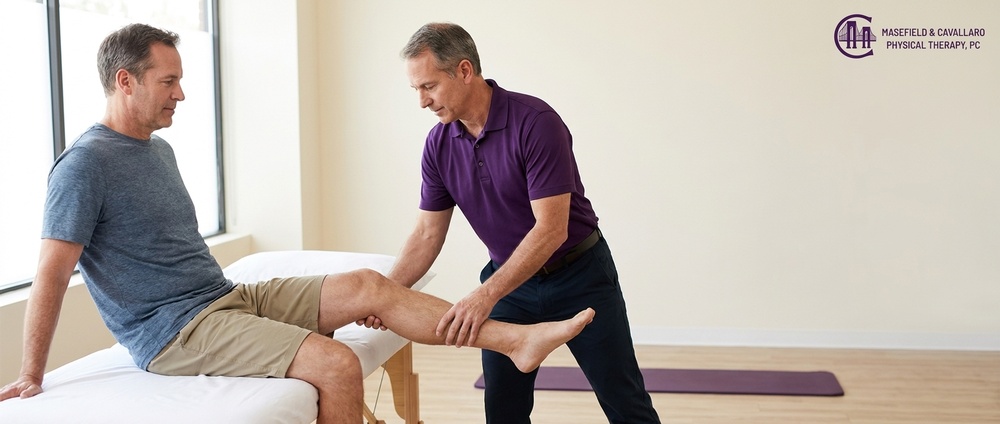
Costly Mistakes To Avoid During Post Surgical Rehabilitation
- Masefield & Cavallaro Physical Therapy, PC
Categories: physical therapy , Mobility Restoration , Orthopedic Recovery , Post Surgical Rehab
Undergoing an operative procedure marks the beginning of a highly structured healing journey. The operating room is simply the first step in regaining your functional independence. True recovery happens in the weeks and months that follow. You must navigate this period with precision and discipline to ensure optimal tissue healing. A well-executed plan for post surgical rehabilitation determines whether you return to your daily activities with confidence or struggle with lingering limitations. The path forward requires a deep understanding of your body and a commitment to evidence-based recovery protocols.
Many patients unknowingly sabotage their own progress by making avoidable errors during their recovery phase. These missteps often stem from a lack of clear guidance or a desire to speed up the natural biological healing timeline. Partnering with a dedicated Rehabilitation Center provides the structural support and clinical oversight necessary to avoid these common pitfalls. Without professional direction, you risk developing scar tissue complications, chronic inflammation, or permanent joint stiffness. You need a comprehensive strategy that aligns your daily actions with your long-term functional goals.
Achieving complete mobility restoration demands a proactive approach to physical therapy after surgery. You must actively participate in your recovery while respecting the physiological boundaries set by your surgical team. The margin for error during this specific window is exceptionally narrow. A single misguided decision can lead to significant setbacks or even require additional surgical interventions. By understanding the most common mistakes made during the rehabilitation process, you can protect your investment in your health and secure a safe return to your active lifestyle.
Pushing Physical Limits Too Early In Recovery
Your initial instinct after surgery might be to test your new joint or repaired tissue immediately. This ambition is understandable but highly dangerous during the early stages of post surgical rehabilitation. Biological healing follows a strict, non-negotiable timeline. Tissues require specific phases of inflammation, proliferation, and remodeling before they can withstand normal mechanical stress. Forcing movement or bearing weight prematurely disrupts this delicate cellular process. You must resist the urge to accelerate your progress beyond the parameters established by your physical therapist.
Subjecting healing structures to excessive loads too soon often leads to micro-tearing and increased joint effusion. This internal swelling severely limits your range of motion and creates a cascade of compensatory movement patterns. Your body will naturally attempt to protect the injured area by shifting weight to healthy joints. These compensations place undue stress on other parts of your musculoskeletal system. Over time, this imbalance creates secondary pain syndromes that complicate your primary physical therapy after surgery plan.
To prevent overloading your repairing tissues, you must adhere strictly to your prescribed weight-bearing status and range of motion restrictions. These guidelines are not suggestions; they are absolute boundaries designed to protect the surgical repair.
- Rely entirely on prescribed assistive devices like crutches or walkers until formally cleared by your clinician.
- Avoid testing your maximum range of motion without direct supervision from a licensed physical therapist.
- Monitor your joint for increased heat, redness, or swelling after any new physical activity.
- Respect the scheduled rest periods between your active therapy sessions to allow for tissue recovery.
Patience remains your most valuable asset during the first few weeks of recovery. Your clinical team will systematically introduce graded exposure to stress as your tissues demonstrate adequate strength. This progressive loading ensures that your muscles and ligaments adapt safely to increased demands. Trusting this calculated progression guarantees a more stable and resilient outcome for your long-term mobility restoration.
Misinterpreting Pain Signals And Warning Signs
Pain serves as a highly complex communication system during your post-operative recovery. You must learn to differentiate between the expected discomfort of rehabilitation and the sharp warning signs of tissue damage. Post surgical rehabilitation inherently involves a certain degree of muscle soreness and joint stiffness. Stretching contracted tissues and activating dormant muscle groups will produce a dull, aching sensation. This type of discomfort is a normal byproduct of the remodeling process and typically subsides shortly after your therapy session concludes.
However, sharp, stabbing, or localized pain directly over the surgical site indicates a completely different physiological response. This acute pain represents a clear warning that you are exceeding the structural capacity of the healing tissue. Attempting to push through this specific type of pain is a severe clinical error. Ignoring these neurological alarm bells can compromise the integrity of the surgical repair and trigger massive inflammatory responses. You must immediately cease any activity that provokes acute, localized joint pain.
Accurate communication regarding your pain levels dictates the safety and effectiveness of your ongoing treatment plan. You should track the intensity, duration, and specific location of your symptoms daily. Providing your physical therapist with detailed feedback allows them to modify your exercise prescription accordingly. If a particular movement consistently generates sharp pain, your clinician needs to analyze your biomechanics and adjust the load or angle of the exercise. Silence regarding your discomfort only leads to prolonged setbacks.
Managing your pain effectively also involves utilizing appropriate modalities outside of your active exercise sessions. Applying ice to manage acute swelling or utilizing prescribed compression garments helps regulate the inflammatory cycle. Consistent pain management creates a more favorable environment for physical therapy after surgery. When your baseline pain is controlled, you can engage more deeply with your functional exercises and accelerate your overall mobility restoration.
Failing To Maintain Consistency With Prescribed Movements
The success of your recovery relies heavily on what you do outside the walls of the clinic. Your physical therapist will design a specific home exercise program to complement your in-clinic sessions. This daily routine is the foundation of effective post surgical rehabilitation. Muscle memory and tissue elasticity require frequent, repetitive stimulation to adapt and improve. Skipping your home exercises breaks this continuous cycle of stimulation and adaptation, causing your progress to stall significantly.
Inconsistency allows scar tissue to form in restrictive patterns around the surgical site. Once cross-linked collagen fibers mature without proper movement, they become incredibly difficult to stretch. This resulting stiffness severely limits your joint mechanics and delays your mobility restoration. Performing your exercises sporadically is simply not enough to overcome the body's natural tendency to stiffen after surgical trauma. You must approach your home exercise program with the same dedication you apply to your professional obligations.
Integrating these prescribed movements into your daily schedule requires careful planning and intentional execution. You should designate specific times of the day strictly for your rehabilitation routine.
- Break your exercise program into smaller, manageable blocks performed multiple times throughout the day.
- Set alarms or calendar reminders to ensure you complete each required session without fail.
- Perform your movements in a quiet, dedicated space where you can focus entirely on proper form and muscle activation.
- Keep a written log of your daily repetitions and sets to maintain accountability and track your functional progression.
Quality of movement always supersedes the sheer quantity of repetitions. Rushing through your daily exercises with poor form reinforces incorrect biomechanics and increases the risk of secondary injuries. You must execute each repetition with deliberate focus, ensuring the correct muscle groups are firing in the proper sequence. Consistent, high-quality movement patterns are the ultimate key to maximizing the benefits of physical therapy after surgery.
Overlooking Adjunctive Therapies And Supportive Modalities
Focusing exclusively on strengthening exercises while ignoring soft tissue health is a frequent oversight in post-operative care. The trauma of surgery affects the entire surrounding myofascial network, not just the specific joint or bone repaired. Muscles often go into protective spasm, and fascial layers become adhered due to localized swelling. Comprehensive post surgical rehabilitation requires a multi-dimensional approach to address these interconnected anatomical structures. Relying solely on isolated joint movements will yield incomplete results.
Integrating supportive modalities into your recovery plan significantly enhances your overall tissue quality. Techniques such as targeted massage therapy help break down restrictive adhesions and improve local blood circulation. Increased blood flow delivers essential oxygen and nutrients to the repairing tissues while flushing out metabolic waste products. This circulatory boost accelerates the healing timeline and reduces the chronic stiffness that often plagues post-operative patients. You must view these soft tissue interventions as essential components of your recovery, rather than optional luxuries.
Acupuncture serves as another highly effective adjunctive therapy for managing post-surgical symptoms. By stimulating specific neurological pathways, acupuncture can help modulate pain perception and reduce systemic inflammation. This non-pharmacological approach to pain management allows you to participate more comfortably in your active physical therapy sessions. When your nervous system is calm and your pain is well-managed, you can achieve deeper ranges of motion and more forceful muscle contractions during your exercises.
Your clinical team should seamlessly weave these various modalities into a unified treatment strategy. The timing and application of soft tissue work, joint mobilization, and active exercise must be carefully coordinated. This integrated approach ensures that every aspect of your musculoskeletal system receives the precise stimulus needed for optimal healing. Embracing a comprehensive care model maximizes your potential for complete and lasting mobility restoration.
Failing To Communicate Changes In Your Physical Condition
Rehabilitation is an active partnership between you and your clinical care team. Your physical therapist relies on your subjective feedback to make critical decisions regarding your progression. Failing to report new symptoms, functional struggles, or changes in your medical status severely limits the effectiveness of your care. You are the only person who truly knows how your body responds to the prescribed physical therapy after surgery. Withholding information out of a desire to appear tough or a fear of slowing down will ultimately compromise your recovery.
Small changes in your physical condition often provide early warning signs of potential complications. A slight increase in joint temperature, a subtle shift in your walking gait, or a new aching sensation in an adjacent muscle group all require immediate clinical evaluation. These minor details help your therapist identify compensatory patterns or low-grade inflammatory responses before they escalate into major setbacks. You must report these observations promptly during your scheduled clinic visits.
Transparency regarding your daily functional challenges is equally important. If you are struggling to navigate stairs at home, experiencing difficulty sleeping due to positioning, or unable to perform basic self-care tasks, your therapist needs to know. They can modify your treatment plan to address these specific real-world limitations.
- Provide exact details about which specific daily activities trigger your symptoms.
- Inform your team immediately if your physician changes any of your prescribed medications.
- Be honest about your compliance with the home exercise program and any difficulties you face in completing it.
- Ask clear, direct questions if you do not fully understand the purpose of a specific exercise or restriction.
Continuous, open dialogue ensures that your rehabilitation program remains perfectly calibrated to your current physical state. As your tissues heal and your strength improves, your protocol must evolve accordingly. Regular progress checks and candid conversations allow your clinical team to safely advance your exercises and functional training. This collaborative communication strategy guarantees a highly efficient and successful path toward your ultimate recovery goals.
Navigating the complexities of post-operative recovery requires diligence, patience, and absolute precision. By avoiding these common errors, you protect your surgical repair and set the foundation for a complete return to your active lifestyle. Every decision you make during this critical healing window either advances your progress or introduces unnecessary risk. You must remain highly focused on executing your prescribed movements correctly, managing your symptoms proactively, and maintaining open communication with your clinical team.
Securing the right professional guidance makes all the difference in your long-term functional outcomes. You deserve a structured, evidence-based approach that addresses your specific anatomical needs and personal recovery goals. To begin your comprehensive evaluation and establish a safe, effective pathway for your rehabilitation, reach out to our clinical coordination team directly via Administration@mcphysicaltherapy.com. Taking immediate, calculated action today ensures you regain your strength, confidence, and independence without unnecessary delays.